| Genus | Ficus |
|---|---|
| Species | ruficaulis |
| Common Name | ruficaulis |
| Description | Download the RNA-Seq raw fastq sequences Download the RNA-Seq assembled sequences and annotation Related analysis: Detailed information: Taiwan (Taitung, Hengchun Peninsula, Lanyu);Distribution abroad: Philippines, Indonesia;Habitat: Mostly in low altitude offshore islands;Phenological period: Flowering in April, fruiting from May to July;Figs solitary or paired axillary, globose or oblate, 2.5-3 cm in diameter, slightly hairy, orange or purplish red at maturity; Basal bracts 3, short and glabrous, 5-8 mm long; Male flowers and gall flowers are born in 1 banyan fruit, and a few male flowers are born in the inner wall near the mouth. ovary obovoid, smooth; style short; stigma enlarged, truncate. Female flowers: sessile or pedicellate; calyx lobes 4; ovary ovoid, smooth; style lateral, longer than in gall flowers; stigma truncate. Branchlets red to pale brown, lenticels conspicuous. Stipules caducous, broadly lanceolate, ca. 2 cm, membranous, glabrous. Petiole 3-10 cm, glabrous; leaf blade broadly ovate to ovate, 15-25 × 10-25 cm, papery to membranous when dry, base rounded, margin entire or occasionally undulate, apex acute; basal lateral veins 2-4, secondary veins 3-5 on each side of midvein, and abaxially prominent. Ficus ruficaulis. These plants can enhance garden and indoor landscapes while contributing to biodiversity conservation through their complex ecological roles. |
| Organism Image | 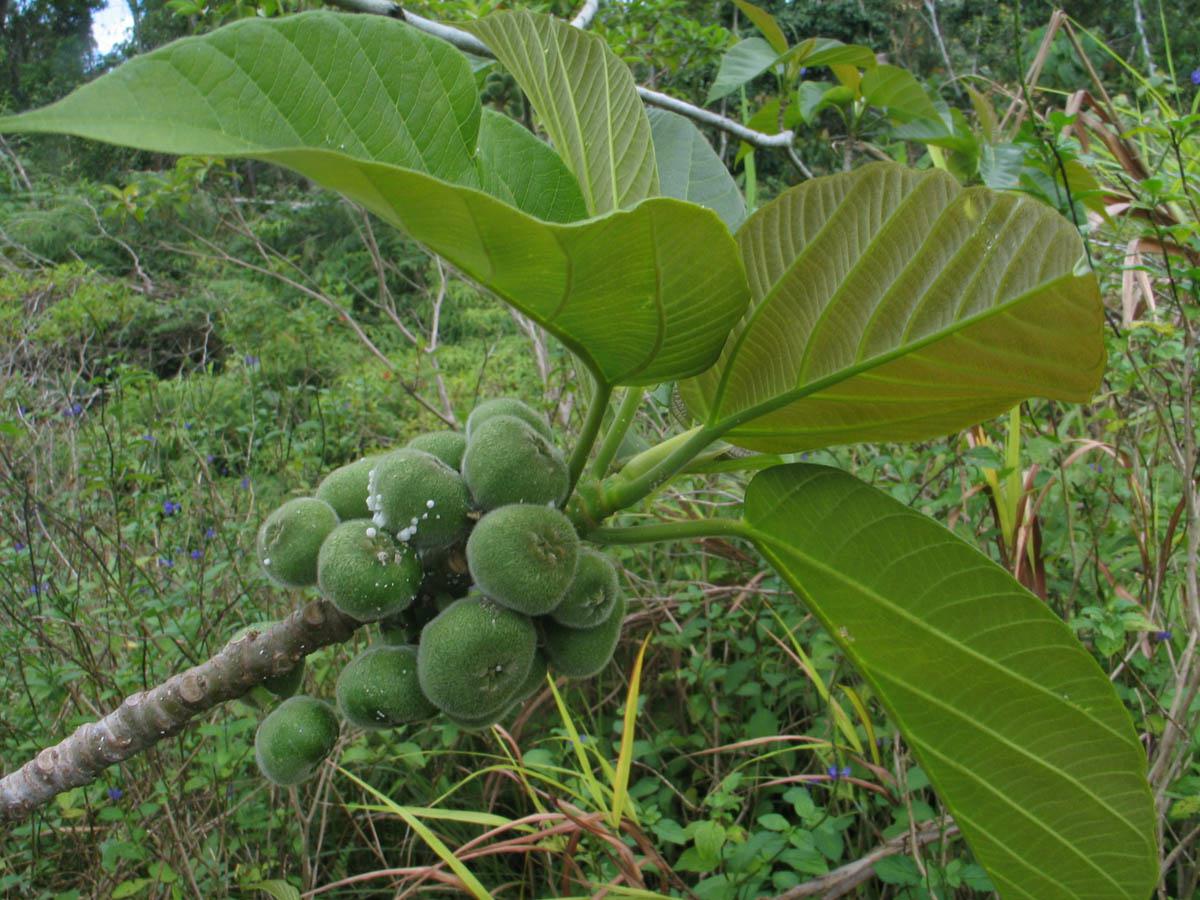 |
Ficus ruficaulis
Summary